


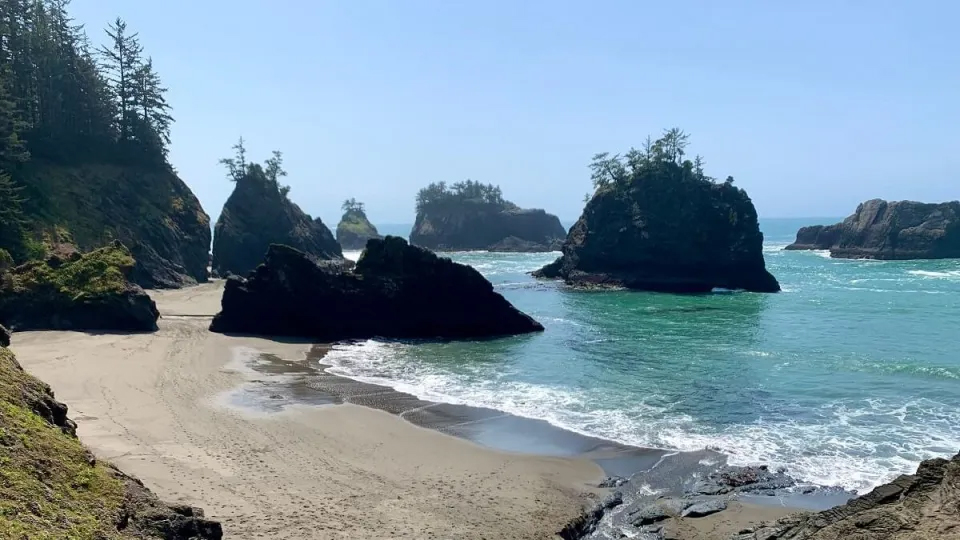


Samuel H. Boardman Scenic Corridor has everything people picture when they dream about an Oregon Coast elopement. Rugged cliffs, hidden beaches, forested trails, and sea stacks make this stretch of coastline feel wild and almost untouched.
But the beautiful photographs don’t always show the full experience.
Some of the most recognizable locations involve steep or rough trails. Parking areas can be small, beaches may only be accessible around certain tides, and the places described as “secret” online aren’t necessarily private anymore.
None of that means you shouldn’t elope here. Samuel H. Boardman is one of the most beautiful stretches of the Southern Oregon Coast. It simply means your day should be planned around the experience you actually want, not just the locations you’ve saved on Pinterest.
Samuel H. Boardman Is More Than One Location
Samuel H. Boardman isn’t a single beach or overlook. It’s a 12-mile scenic corridor between Brookings and Gold Beach with viewpoints, picnic areas, beaches, and trails spread along Highway 101.
That variety is one of the best reasons to elope here. You can walk through a coastal forest, exchange vows near the water, stop at an overlook, and end the day watching the sun disappear behind the sea stacks without traveling across the entire state.
It also means you shouldn’t try to include every location in one day. The trails, parking, tides, and driving time between stops add up quickly. I would rather help you choose a few places that feel different from one another and give you time to enjoy them than spend your elopement constantly returning to the car.
What the Photos Don’t Show About Natural Bridges
Natural Bridges is one of the most recognizable locations along Samuel H. Boardman, but it isn’t necessarily the best place to center your entire elopement.
The official viewpoint is reached by a short trail and overlooks the arched rocks and blowholes below. It’s beautiful, but it’s still a public viewpoint with other visitors moving through the area.
You may have also seen photographs taken from unofficial trails or on top of the natural bridges themselves. Those images can make the location look secluded and easy to reach when the reality is very different. The cliffs along this coastline can be unstable, and Oregon State Parks advises visitors to stay behind guardrails and fences.
I would treat Natural Bridges as an optional scenic stop rather than the place where your entire day has to happen. You can still experience the view without depending on an unsafe trail or trying to recreate the same photograph everyone else has already taken.
Secret Beach Isn’t Really Secret
Secret Beach is still beautiful, but the name can create unrealistic expectations.
The official park brochure describes the route as a rough three-quarter-mile trail down to the beach. Access to portions of the shoreline also depends on the tide, and the climb back up may feel much more demanding in wedding clothes than it did on the way down.
Because Secret Beach has become one of the most photographed locations along the corridor, you may also encounter other couples, photographers, or visitors. That doesn’t automatically make it a poor choice. It simply means we should approach it as a shared public space rather than expecting complete privacy.
If Secret Beach is important to you, I would check the tide, allow extra time for the trail, and avoid building your entire timeline around one small window of access.
Samuel H. Boardman Elopement Locations to Consider
The best location for your elopement will depend on your guest count, mobility needs, preferred scenery, tide conditions, and how much hiking you actually want to do.
Arch Rock
Arch Rock is one of the easiest viewpoints to reach. A short paved path leads from the parking area to views of offshore sea stacks and small islands.
It’s a great option for couples who want dramatic coastal scenery without planning a hike. Because it’s an overlook rather than a private ceremony venue, I would expect other visitors to pass through and keep the ceremony simple.
Best for: Easy access, guests with limited mobility, and a brief scenic stop.
Whaleshead Beach
Whaleshead Beach gives you direct access to the sand, ocean, and one of the corridor’s most recognizable offshore rock formations.
The easier route begins at the Whaleshead Beach Picnic Area and follows a flat path to the beach, although the road into the picnic area is rough gravel. There is also a steeper trail from the southern viewpoint, so it’s important to know which access point you’re using before your wedding day.
Whaleshead works well for couples who want to spend time on the beach rather than viewing the coast entirely from above.
Best for: A beach ceremony, picnic, or relaxed time near the water.
Cape Ferrelo
Cape Ferrelo offers grassy coastal scenery and expansive ocean views. The official loop is approximately one mile and climbs toward the top of the cape.
It can be a beautiful choice if you want your elopement to include a short, intentional walk without committing to a long hike. Wildflowers can brighten the hillside in spring, and the viewpoint is also known for whale watching during migration seasons.
Because the cape is exposed, wind and changing weather should be considered when planning your ceremony or portraits.
Best for: Couples who want an open coastal landscape and don’t mind a short hike.
Lone Ranch Beach
Lone Ranch is close to Brookings and offers an approachable way to include beach scenery without driving deep into the corridor.
It can work especially well at the beginning or end of your elopement because of its proximity to town. The beach, picnic area, and coastal views also give you room to slow down rather than treating it as another quick roadside stop.
Best for: A relaxed beach experience close to Brookings.
Secret Beach and Thunder Rock Cove
Secret Beach and Thunder Rock Cove offer some of the dramatic scenery that makes Samuel H. Boardman so recognizable. The combination of forest, cliffs, sea stacks, and shoreline creates a completely different experience from the corridor’s paved overlooks.
The tradeoff is the rougher trail, tide-dependent access, and smaller parking area. I would only include this part of the corridor when the timeline leaves enough room to navigate it safely and without rushing.
Best for: Couples comfortable with a rougher trail who want more adventurous coastal portraits.
Not Every Location Needs to Be Shared Online
Couples deserve enough information to understand what an area offers, but that doesn’t mean every quiet viewpoint or portrait location needs to be published with exact directions.
Some parts of the coast are better protected when they aren’t turned into another geotagged stop. Your ceremony location also needs to fit more than an aesthetic. It should make sense for your group size, comfort level, weather, and the conditions on your actual wedding day.
During the planning process, we can compare locations more closely and choose places that fit your day without publicly sharing every detail.
The Best Time to Elope at Samuel H. Boardman
There isn’t one perfect month for every couple.
Summer usually brings longer days and a better chance of dry weather, but it also attracts more visitors to the Oregon Coast. Spring can bring wildflowers and fresh greenery, while fall can offer a moodier atmosphere with fewer people.
Winter may feel quiet and dramatic, but it also brings a greater chance of rain, wind, rough ocean conditions, and muddy trails.
No matter which season you choose, flexibility matters. Oregon Coast weather can change quickly, and a cloudy or foggy day doesn’t make the coastline any less beautiful. Those conditions often give the area the atmosphere people love most about it.
Why Tide Timing Matters
Checking the tide isn’t an optional detail when your plans include an Oregon Coast beach.
Some areas may become difficult or impossible to access as the water rises. Incoming tides can also cut off the route you used to reach a section of the beach.
Oregon State Parks warns visitors that tides can rise quickly and leave people stranded. It also cautions against unexpected waves, unstable cliffs, and driftwood that can shift near the water.
Before your elopement, I would check the official tide tables and build the beach portion of your timeline around a safe window. If the conditions don’t cooperate, we can use an overlook or forest location instead of forcing the original plan.
Will Your Samuel H. Boardman Elopement Be Private?
Complete privacy can never be guaranteed at a public park.
The easiest viewpoints and most recognizable beaches naturally attract other visitors, especially during summer and on weekends. Even locations with more involved trails may have hikers or other couples nearby.
Planning your ceremony on a weekday and choosing the time thoughtfully can improve your chances of having a quieter experience. It also helps to select a location with enough room to adjust if someone else is already using the exact spot you imagined.
Privacy often depends more on flexibility than finding the most difficult trail.
Do You Need a Permit to Elope at Samuel H. Boardman?
Permit requirements can depend on your group size, setup, exact location, and what you plan to bring with you.
Large gatherings, activities that restrict public access, commercial filming, and events involving structures or elaborate setups may require additional approval. Rules can also differ depending on whether your ceremony takes place within the park or directly on the ocean shore.
Because permit requirements can change, I recommend contacting the Harris Beach Management Unit or Oregon Parks and Recreation Department with the specific details of your ceremony before assuming that no permit is needed.
Even when a permit isn’t required, your elopement should remain simple and leave the location exactly as you found it. Avoid arches, furniture, confetti, flower petals, or anything that could damage the landscape or interfere with other visitors.
What a Relaxed Eight-Hour Samuel H. Boardman Elopement Could Look Like
Eight hours gives us enough time to document the full story of your elopement without filling every moment with hiking, posing, or driving between locations.
Your day could begin at your cabin or Airbnb, where you get ready separately, write your vows, and spend a little time settling into the day before seeing each other. From there, we could head into the corridor for a private first look and a short forest walk before meeting your closest family members for the ceremony.
Afterward, there would still be time for family photos and an unhurried celebration with a picnic, cake, or a meal together. Once your guests head back, we could explore one or two coastal locations before ending the evening on the beach or at an overlook as the light changes over the water.
Eight hours doesn’t mean your day has to feel packed. It gives us the flexibility to include the people and experiences that matter to you while leaving enough space to take everything in and let the day unfold naturall
You Don’t Need to Hike All Day to Experience the Southern Oregon Coast
Samuel H. Boardman includes everything from paved overlooks and flat beach paths to longer, steeper sections of the Oregon Coast Trail. Your elopement can be as easygoing or adventurous as you want it to be.
You don’t have to prove that your day was adventurous by choosing the hardest trail. Walking through the forest, sharing your vows beside the ocean, exploring tide pools, or watching the sunset together can be more than enough.
The goal is to create an experience that feels like the two of you while choosing locations that allow you to stay present and enjoy where you are.
Planning Your Samuel H. Boardman Elopement
I help couples create intentional Oregon elopement days through photography, digital video, and Super 8 film. My planning support includes comparing locations, creating a realistic timeline, and finding experiences that fit your relationship without making the day feel rushed or overly structured.
If you’re dreaming about a Southern Oregon Coast elopement filled with rugged scenery, gentle adventure, and plenty of room to be together, I would love to hear what you’re imagining.
More Oregon Elopement Resources
Planning an Oregon elopement involves more than choosing a beautiful ceremony location. From comparing different parts of the state to navigating weather, tides, and travel logistics, there’s a lot to consider. I’ve created these additional guides to help you build a day that feels relaxed, intentional, and completely yours.
- Oregon Coast Elopement Guide – A deeper look at planning an elopement along the coast, including seasons, locations, activities, and important logistics.
- Redwoods vs. Oregon Coast Elopement – Compare the scenery, accessibility, weather, and overall experience of each destination, or learn how to turn your celebration into a two-day wedding experience that includes both the redwoods and the Oregon Coast.
- Northern vs. Southern Oregon Coast – Compare the scenery, accessibility, crowds, and overall experience to decide which part of the coast fits your day.
If you’re looking for someone to document your elopement while also helping you compare locations and create a relaxed timeline, I’d love to help. Explore my Oregon elopement photography and videography or reach out here to begin planning your day.


